
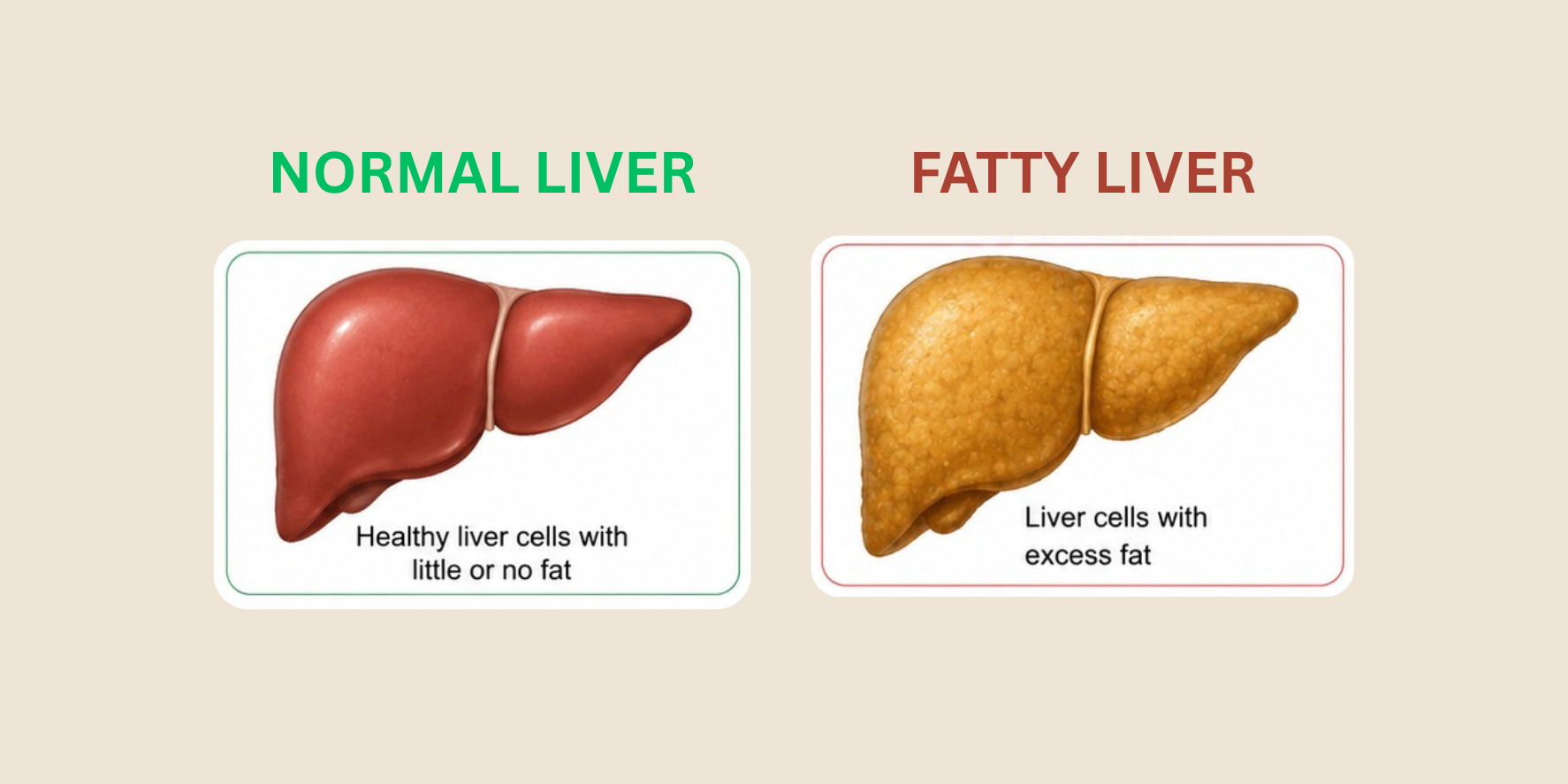
FATTY LIVER DISEASE
The liver is the largest internal organ in the human body. It performs several vital functions, including:
- Digesting food by producing bile
- Storing energy
- Removing toxins from the blood
- Processing nutrients, fats, proteins, and carbohydrates
Fatty liver disease occurs when excess fat accumulates in the liver cells.
There are two main types of fatty liver disease:
- Non-Alcoholic Fatty Liver Disease (NAFLD/MASLD)
- Alcoholic Fatty Liver Disease (AFLD)
NON-ALCOHOLIC FATTY LIVER DISEASE (NAFLD/MASLD)
Non-Alcoholic Fatty Liver Disease is classified into two stages:
- Simple Fatty Liver (Simple Steatosis)
- Fat accumulates in the liver.
- There is little or no inflammation.
- Liver cells are not significantly damaged.
- Usually does not progress to serious liver disease.
- Many people have no symptoms.
- Non-Alcoholic Steatohepatitis (NASH)
NASH is a more severe form of fatty liver disease.
It is characterized by:
- Fat accumulation in the liver
- Inflammation
- Liver cell damage
If left untreated, NASH may lead to:
- Liver fibrosis
- Cirrhosis
- Liver failure
- Liver cancer (Hepatocellular carcinoma)
ALCOHOLIC FATTY LIVER DISEASE (AFLD)
Alcoholic Fatty Liver Disease develops due to excessive alcohol consumption.
Normally, the liver breaks down alcohol and removes it from the body. During this process, harmful substances (toxins) are produced, which can:
- Damage liver cells
- Cause inflammation
- Lead to fat accumulation in the liver
If alcohol consumption continues, the condition may progress to:
- Alcoholic hepatitis
- Liver fibrosis
- Cirrhosis
- Liver failure
In its early stages, AFLD often causes no noticeable symptoms.
Common Causes of Fatty Liver
- Overweight or obesity
- Type 2 diabetes
- Insulin resistance
- High triglycerides
- Sedentary lifestyle
- Diet high in sugar and refined carbohydrates
- Frequent consumption of processed foods
- Excessive alcohol intake
- Certain medications
SYMPTOMS OF FATTY LIVER DISEASE
Many people have no symptoms in the early stages.
As the disease progresses, symptoms may include:
- Persistent tiredness or fatigue
- Mild pain or discomfort in the upper right side of the abdomen
- Unexplained weight loss
- Loss of appetite
- Yellowing of the skin and eyes (Jaundice)
- Swelling of the abdomen (Ascites)
- Swelling of the legs and feet (Edema)
- Dark-colored urine
- Difficulty concentrating or confusion
COMPLICATIONS OF FATTY LIVER DISEASE
If left untreated, fatty liver disease may lead to:
- Fluid accumulation in the abdomen
- Enlarged veins in the oesophagus that may rupture and cause severe bleeding
- Confusion, poor concentration, drowsiness, personality changes, and impaired speech due to liver dysfunction
- Liver fibrosis– Formation of scar tissue
- Liver cirrhosis– Severe scarring of the liver
- Liver failure
- Liver cancer
Who Is at Risk?
You may be at higher risk if you have:
- Excess body weight
- Diabetes
- High cholesterol
- High triglycerides
- High blood pressure
- Polycystic Ovary Syndrome (PCOS)
- Sleep apnoea
- Sedentary lifestyle
- Excess alcohol consumption
- Family history of fatty liver disease
Diagnosis Methods
Doctors may recommend:
- Liver Function Tests (LFT)
- Ultrasound Scan
- FibroScan
- MRI or CT Scan (when necessary)
- Blood sugar and lipid profile
- Liver biopsy (in selected cases)
Reversing of Fatty Liver
The fatty Liver is manageable, especially in case of early stages of fatty liver through consistent lifestyle changes.
- Eat a Liver-Friendly Diet
Choose foods such as:
- Fresh vegetables
- Leafy greens
- Seasonal fruits
- Whole grains
- Millets
- Lentils and legumes
- Nuts and seeds
- Healthy fats (olive oil, flaxseed)
- Adequate water
Limit or avoid:
- Sugary drinks
- Refined sugar
- White flour products
- Deep-fried foods
- Processed foods
- Excess saturated fats
- Excess salt
- Alcohol
- Maintain a Healthy Weight
Losing 7–10% of body weight can significantly reduce liver fat and inflammation in overweight individuals.
Aim for gradual and sustainable weight loss.
- Exercise Regularly
Aim for at least:
- 150 minutes of moderate exercise each week
Include:
- Walking
- Cycling
- Swimming
- Yoga
- Strength training
- Improve Sleep
Poor sleep can worsen insulin resistance.
Aim for:
- 7–8 hours of quality sleep
- Regular sleep schedule
- Reduced screen time before bed
- Manage Stress Naturally
Chronic stress affects hormone balance and metabolism.
Helpful practices include:
- Meditation
- Deep breathing
- Yoga
- Mindfulness
- Nature walks
- Support Metabolic Health
Keep under control:
- Blood sugar
- Cholesterol
- Blood pressure
Regular health check-ups are important.
Key Takeaway
Fatty liver disease is often silent in its early stages, but it is largely preventable and, in many cases, reversible through timely lifestyle changes. A balanced diet, regular physical activity, weight management, adequate sleep and appropriate medical care form the foundation of liver health. Natural foods and traditional herbs may provide supportive benefits when used responsibly as part of a holistic wellness approach.
Disclaimer
This blog is for informational purposes only and is not a substitute for professional medical advice, diagnosis, or treatment. Always consult a qualified healthcare professional before making any changes to your diet or lifestyle. Teja Organics is not responsible for any outcomes resulting from the use of this information.